


A request for proposal invites vendors to offer solutions on comparable terms. It tells suppliers what you need, how proposals will be judged, and which rules govern questions, deadlines, and confidentiality. A clear RFP saves evaluation time because responses follow the same structure and address the same risks. Write it as a buying document, not as a vague wish list or a nearly finished design that leaves nothing for proposers to decide. The best RFPs make a serious vendor’s work easier while still protecting the buyer’s ability to compare offers fairly after the deadline passes.
Other templates in this library that often go with this one are the Best Board Resolution Templates in Word, the BEST Financial Statement Excel Templates and the BEST Employee of the Month Certificate Templates.
Clarify what you are buying and what success looks like
Open with the business problem, the users affected, and the outcomes that would count as success. Describe scope in concrete deliverables and boundaries: what is included, what is excluded, and which constraints are fixed because of technology, regulation, facilities, or existing contracts. Provide enough background for an outsider to understand the environment without dumping every internal memo into an attachment that nobody will read carefully. A short glossary helps when your organization uses terms vendors may not share.
Name the decision-makers and the evaluation timeline at a high level so vendors know whether they can meet your calendar. If budget ranges, mandatory certifications, accessibility requirements, or required local presence apply, state them early rather than surprising finalists after weeks of writing. When samples in the gallery serve different industries, borrow structure from the closest match and rewrite the substance for your purchase. Do not leave another agency’s program names, statutory references, or contact details in your finished file. Ask an internal subject-matter expert to pressure-test whether a capable outsider could bid intelligently from the description alone.
Set response rules vendors can follow without guesswork
Specify format, page limits, required sections, submission method, and the deadline with time zone. Explain how questions will be collected and whether answers will be shared with all participants. Identify a single contact for clarifications so side conversations do not create uneven information. Require a validity period for quoted prices and state whether alternate proposals are welcome, discouraged, or invited in a separate section that keeps the baseline comparison intact.
List mandatory forms, conflict-of-interest disclosures, and insurance or security questionnaires if your process needs them. Keep the instructions consistent with the evaluation criteria. Vendors should not discover a scored factor that never appeared in the instructions. If site visits or demonstrations are part of the process, publish the rules for attendance and whether attendance is mandatory. State how late submissions will be handled so the team is not negotiating exceptions under pressure.
Check the FREE Request for Proposal (RFP) Word Templates
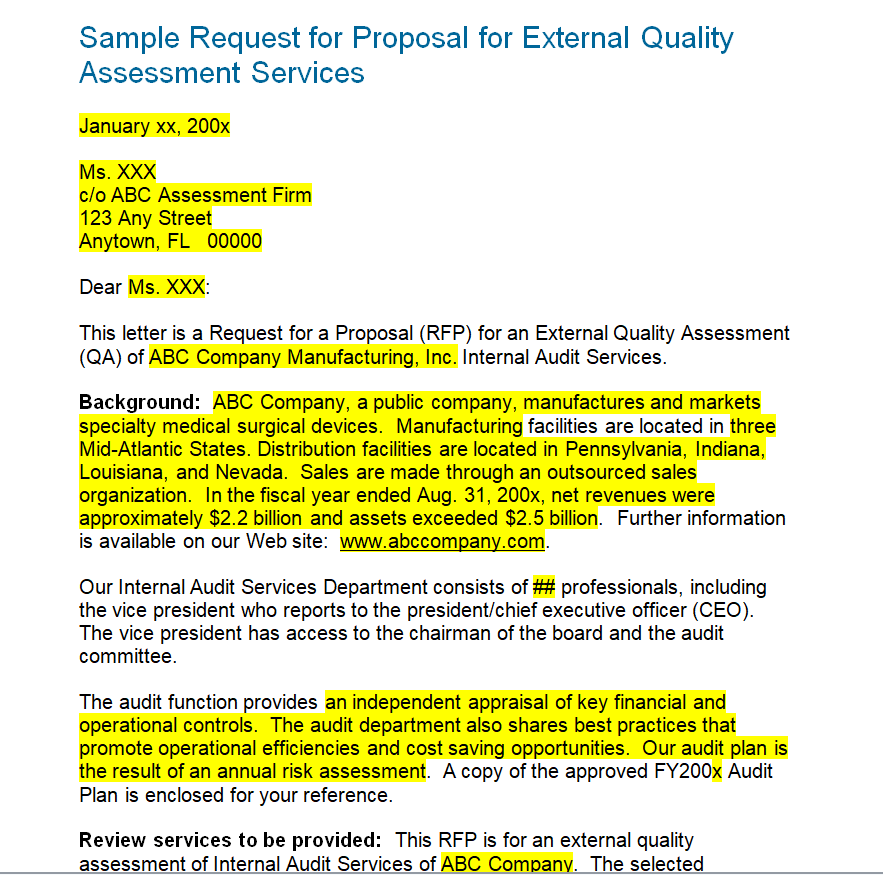
External Quality Assessment Request for Proposal Template
File Size: 20 KB
Auditing Services Request for Proposal Sample Doc

File Size: 22 KB
Agency’s Request for Proposal Template

File Size: 14 KB
Detailed Request for Proposal (RFP) Template

File Size: 80 KB
Fillable Request for Proposal Example in MS WORD

File Size: 670 KB
Transport Services Tool Request for Proposal Template

File Size: 509 KB
Project Request for Proposal Word Template

File Size: 84 KB
Simple Request for Proposal Letter Sample Word

File Size: 09 KB
State Education Department’s Request for Proposal Template

File Size: 214 KB
Standard Request for Proposal (RFP) Example

File Size: 105 KB
Formal Request for Proposal / Quotation Template

File Size: 15 KB
More Request for Proposal (RFP) Doc Templates
Confidential Request for Proposal Format

File Size: 71 KB
Task Order Request for Proposal Template

File Size: 160 KB
Formal Request for Proposal Template Word

File Size: 20 KB
Blank Request for Proposal Form Template

File Size: 10 KB
Comprehensive Request for Proposal Sample in MS WORD

File Size: 25 KB
Generic Request for Proposal (RFP) Template

File Size: 48 KB
Departmental Request for Proposal Word Sample

File Size: 21 KB
Banking Services Request for Proposal Sample Doc

File Size: 16 KB
Sample Request for Proposal Template for Auditing Services

File Size: 13 KB
Free Editable Request for Proposal Template Word

File Size: 86 KB
Score proposals against published criteria
Publish the criteria and relative weights before proposals arrive. Typical factors include understanding of need, technical approach, relevant experience, delivery plan, staffing, and price—but choose factors that match this purchase rather than copying a generic list from a previous project. Train evaluators on the rubric and on how to record notes that another reviewer can understand later if a decision is challenged or audited.
Separate mandatory pass-fail requirements from scored quality factors. A proposal that fails a mandatory item should not be rescued by a glossy presentation. When interviewing shortlisted vendors, ask the same core questions and document answers beside the written scores. Avoid changing weights after opening proposals unless your governance process expressly allows a documented revision communicated to participants as required. Keep price evaluation method transparent enough that vendors know whether lowest price wins, or whether value scoring applies.
Protect confidential material while inviting alternatives
Mark which attachments are confidential and what vendors may reuse after the process ends. Ask proposers to label their own confidential pages clearly. If you want creative alternatives, say how those should be presented—often as a separate optional section—so the baseline comparison remains intact and pricing remains understandable across the standard response.
After award, notify unsuccessful vendors according to your policy and retain the RFP pack, questions log, scores, and decision record for the period your organization requires. Lessons from one RFP should improve the next one: unclear scope language, missing constraints, and late question answers are common sources of weak or non-comparable proposals. A short internal debrief after award is often worth more than another decorative cover page on the next template you download.
Questions about issuing a request for proposal
When is an RFP preferable to asking a few vendors for informal quotes?
Use an RFP when scope is complex, comparison must be auditable, or many vendors could respond. Informal quotes can work for simple, well-understood purchases with low risk and a small invite list. Choosing the lighter process for a high-stakes project often produces answers that cannot be compared fairly later when stakeholders ask why a supplier was chosen.
Can vendors propose a different approach than the one described?
Yes, if your instructions allow alternates and explain how they will be evaluated. Without that permission, vendors may stay silent about better options or submit non-comparable responses that frustrate the evaluation team. State whether the alternate must still meet mandatory requirements and how pricing should be shown.
Who inside my organization should approve the RFP before it is sent?
Include the business owner, procurement or contracting role, and anyone responsible for security, legal, or budget constraints that appear in the document. An RFP released without those checks often needs embarrassing amendments after vendors have already started writing and budgeting their response effort.


