


A problem statement defines an undesirable condition or a focused knowledge problem that a research study or project will address. Researchers, students and improvement teams use it to decide what belongs inside the work and what falls outside it. A strong statement gives readers enough evidence and context to understand why the issue matters without prematurely declaring that one preferred solution must be correct.
These related pages may also be useful: the BEST Research Statement PDF Samples, the Special Internship Statement of Purpose Samples and the Bank Statement Templates.
This document is narrower than a thesis introduction, which also develops broader context and the study’s contribution. It is not a research framework explaining relationships between concepts, nor a questionnaire for collecting data. Here the immediate task is to state the problem precisely enough that a supervisor, project sponsor or team can judge whether further investigation is justified.
Select a model that matches the kind of problem
Visible sample labels include research, a project memorandum, a payroll system, a short-term project, supply chains, a manager’s document and a science guide. Outline, worksheet and standard examples provide other starting points. Choose by the setting and purpose shown in the label, then examine whether the preview provides a clear way to separate background, evidence and the issue itself.
A payroll or supply-chain example may illustrate an operational problem; a research example may emphasize something not adequately understood. These are useful distinctions, not promises about hidden document sections. Do not assume a sample supplies valid evidence for your own situation. Its subject and layout can guide organization, but your claims must come from your records or relevant sources.
FREE Editable Problem Statement Templates are Here
Research Problem Statement Word Template
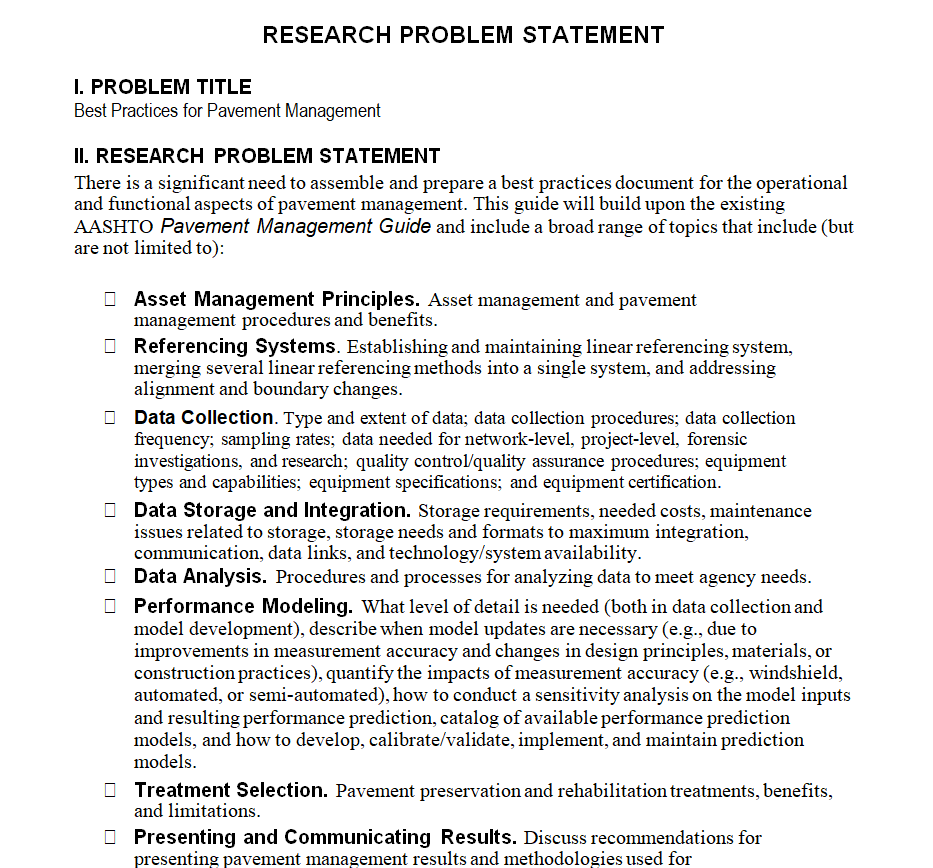
File Size: 58 KB
Elegant Problem Statement Worksheet Template
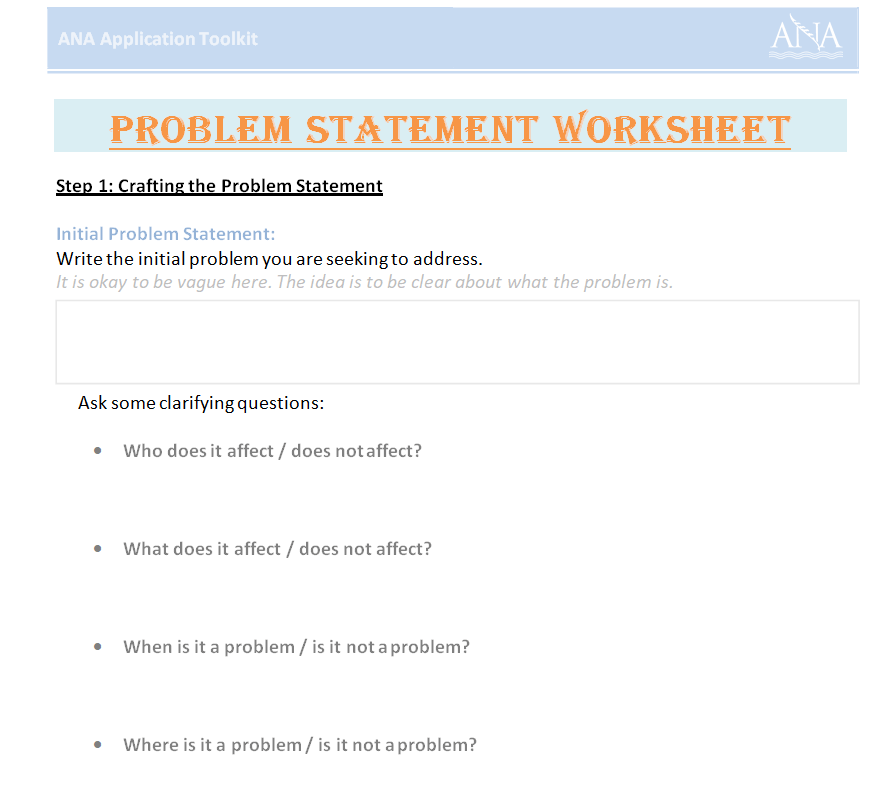
File Size: 161 KB
Project Memorandum Problem Statement Template Word
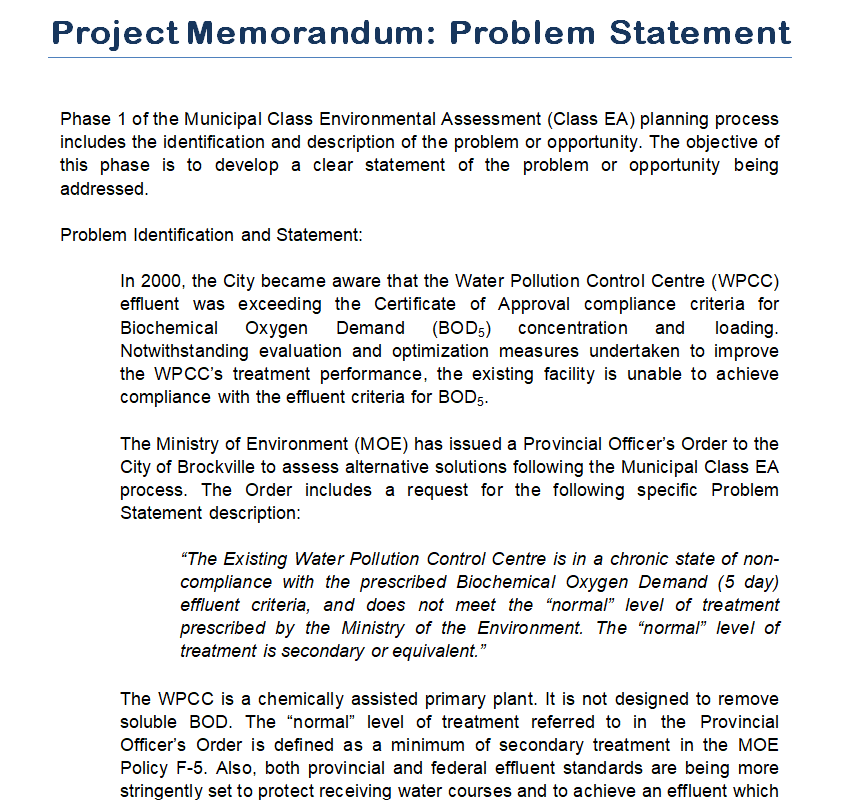
File Size: 19 KB
Detailed Payroll System Problem Statement Sample
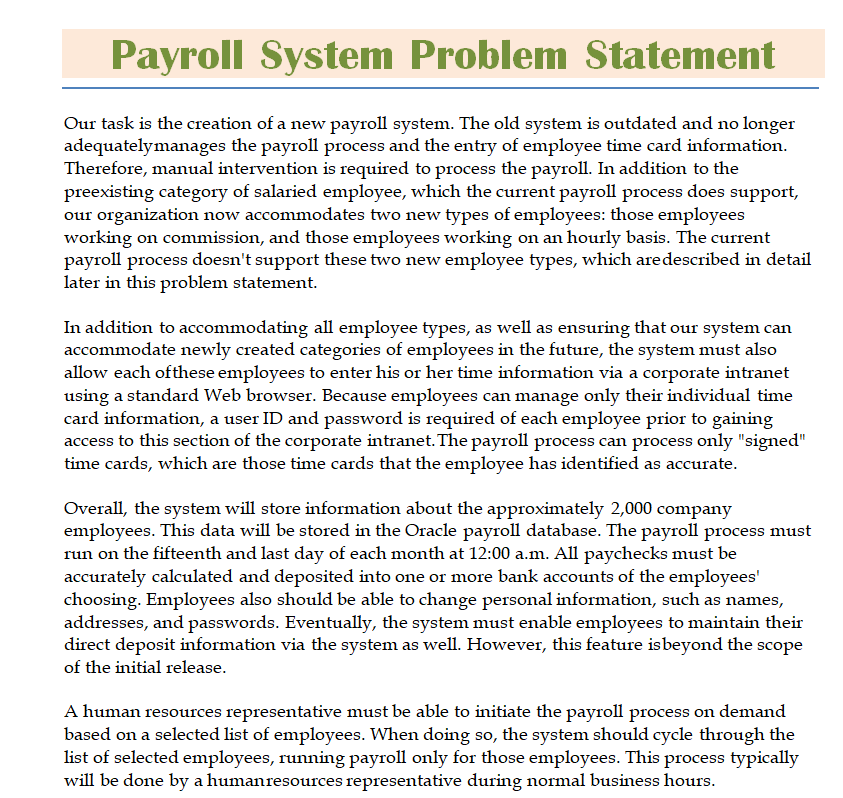
File Size: 15 KB
More Problem Statement DOC Templates
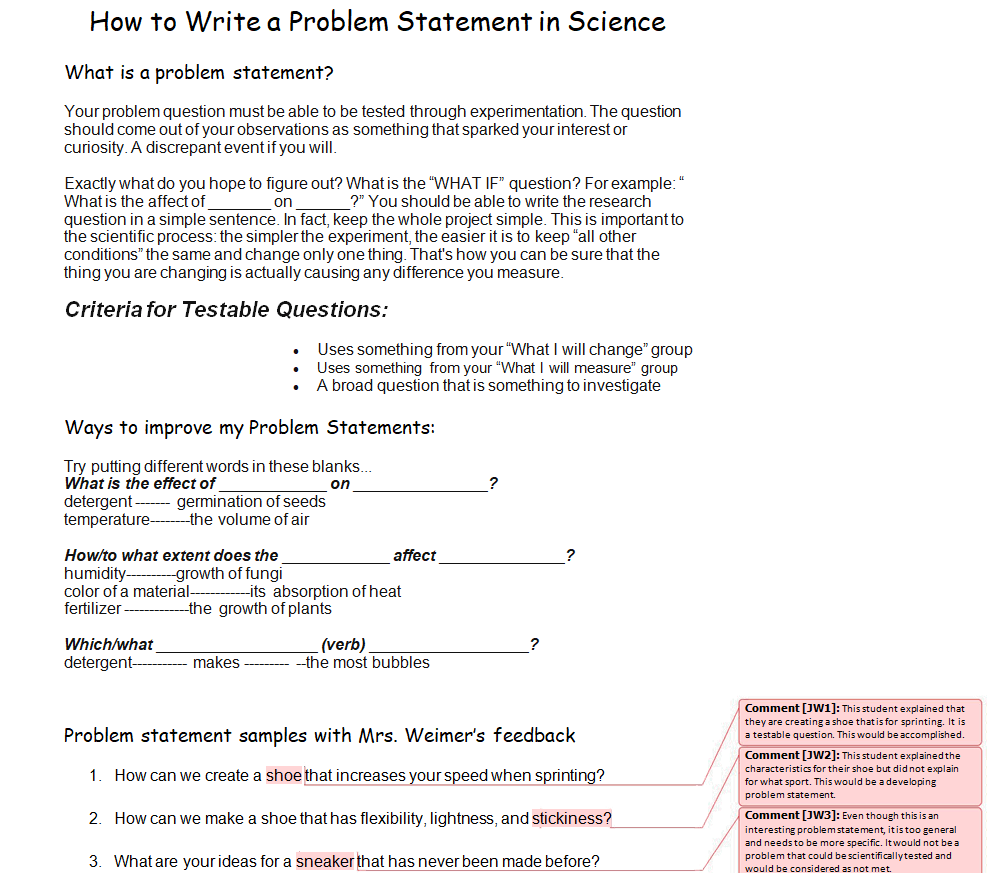
Science Problem Statement Guide Template
File Size: 12 KB
Separate observations from explanations
Start with what can be demonstrated. “During April, 18 of 120 approved expense claims missed the stated processing target” describes a measurable condition. “The finance team is careless” attributes blame without establishing a cause. A problem statement should make the first kind of claim and identify what remains uncertain before a project investigates reasons.
Similarly, “We need new software” is a proposed remedy, not a well-defined problem. The underlying issue might involve delays, duplicate entry or unreliable records. Naming the remedy too early can conceal alternatives such as clearer approvals or better training. Describe the performance or knowledge shortfall first so the investigation has room to discover the most appropriate response.
Develop a defensible statement in six passes
- Define the setting and affected group. Identify the process, population, location or research context. Use a boundary that is specific enough to investigate rather than claiming that an entire industry has the same unexplained difficulty.
- Describe the expected condition. Explain the relevant service standard, practical requirement or state of knowledge. Cite an applicable source where needed; do not invent a target simply to make the current situation look inadequate.
- Establish the observed condition. Present relevant records, prior findings or documented observations, with dates and units. Separate confirmed information from preliminary indications, and make clear when available evidence covers only a limited part of the setting.
- Explain the consequences. Show who experiences the effects and how they matter. Distinguish measured costs or outcomes from plausible risks. If the impact has not been quantified, say so instead of turning a reasonable concern into a fabricated statistic.
- Identify the unresolved issue and scope. State what needs to be understood or improved, including the period and boundaries. A research problem should identify a meaningful uncertainty; an operational project should identify a condition that can realistically be examined.
- Check alignment with the next decision. Ask whether the statement supports an answerable research question or a feasible project objective. Remove proposed methods and solution details that belong elsewhere unless your required format explicitly asks for them.
Test for clarity before seeking approval
Give the draft to someone unfamiliar with the project. Ask them to identify the affected group, the undesirable condition and the evidence for it. If they can identify only a broad topic such as “employee satisfaction,” the statement probably needs a sharper problem. If they can identify only a solution, it needs a clearer account of why action is required.
Keep comparisons meaningful. A processing delay measured in business days cannot be compared directly with a target expressed in calendar days without explanation. A percentage needs its denominator and period. Small factual inconsistencies can undermine the case even when the underlying concern is genuine and important.
Avoid overstating novelty in academic work. “No research exists” is difficult to defend without a thorough search. A more precise claim might concern limited evidence for a specific population or uncertainty about an established finding in a different setting. Support that claim with relevant literature rather than presenting your unfamiliarity with a subject as a research gap.
Once the scope is agreed, use it to resist expansion. New issues discovered during investigation can be logged for later consideration. They do not all need to be inserted into the original statement, particularly when doing so makes the project impossible to complete with the available time and resources.
Frequently Asked Questions
Can a problem statement include a suspected cause?
It can identify a cause as a hypothesis or preliminary explanation, provided that status is explicit. Do not present an untested assumption as an established finding. The distinction matters because the investigation may reveal that a different mechanism explains the observed condition.
What if baseline records are incomplete?
Describe the available evidence and its limits, then make baseline measurement an early project activity if appropriate. Avoid filling the gap with invented numbers. A preliminary statement can be refined after verification, with the change documented and agreed by the relevant supervisor or sponsor.
Should one statement cover several unrelated problems?
Usually not. Separate unrelated issues so each has a clear scope, evidence base and decision. Closely connected symptoms can belong together when you explain the connection, but a list of organizational complaints rarely provides a workable foundation for one focused project.

