


A research statement is a document in which an academic explains what they study, why it matters, what they have achieved so far and where their research is heading next. It is most often requested in applications for faculty positions, postdoctoral fellowships, tenure and promotion reviews, and some graduate programs or research grants. Unlike a thesis introduction, which frames a single project, or a problem statement, which defines one question, a research statement presents a whole research agenda across several years.
When the work overlaps, check the BEST Financial Statement Excel Templates as well as the Useful Research Framework Templates PDF and the Problem Statement DOC Templates.
Review committees read it to judge three things: whether the applicant has a coherent, significant line of inquiry, whether they have the record to suggest they can deliver, and whether their future plans fit the department, institution or funder. The best statements read as a confident narrative rather than a list of papers.
Comparing the samples by purpose and field
The visible sample names span several disciplines, including nursing, psychology, business management, quantum computing, blockchain and arts. Some are labelled as statements of research interest, which are usually shorter and suited to graduate applications. Others are academic, graduate, professional or job application statements, and there is an outline and a fillable form.
Look first at the purpose. A statement of research interest for a graduate program focuses on questions you want to explore and why. A faculty or postdoctoral statement needs a record of past work and a funded, realistic plan. Then compare samples in or near your field to see conventions on length, tone and how much technical detail to include. Every discipline reads these documents slightly differently.
Download Research Statement PDF Samples Here
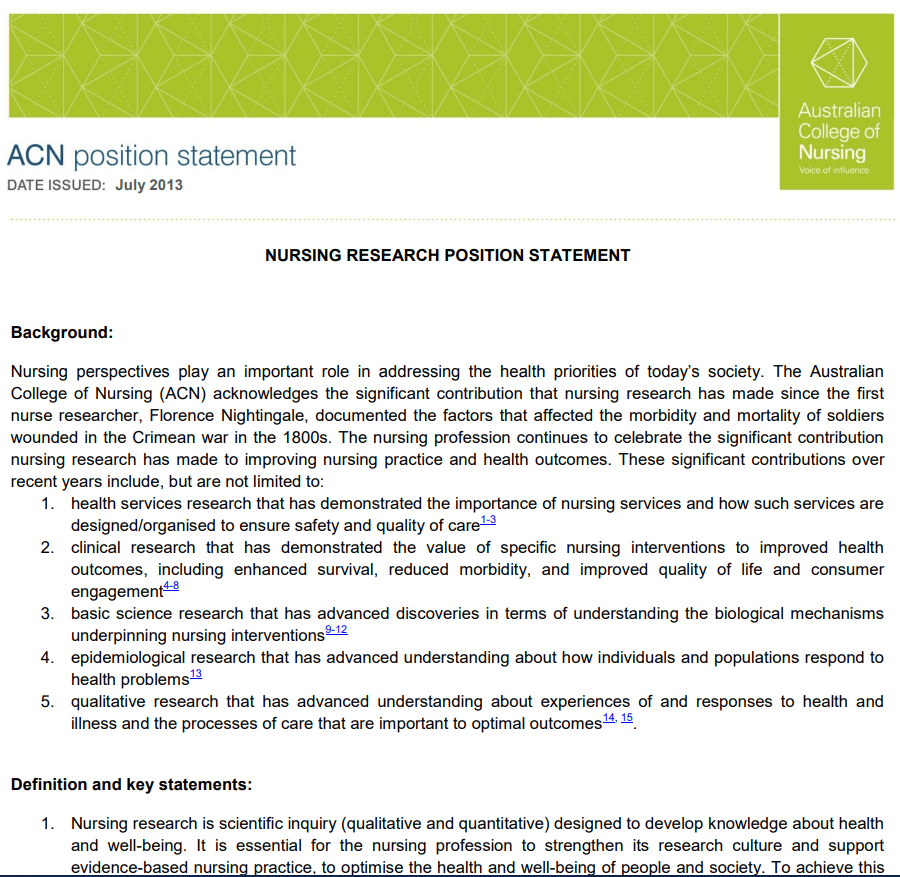
Nursing Research Position Statement Sample
File Size: 244 KB
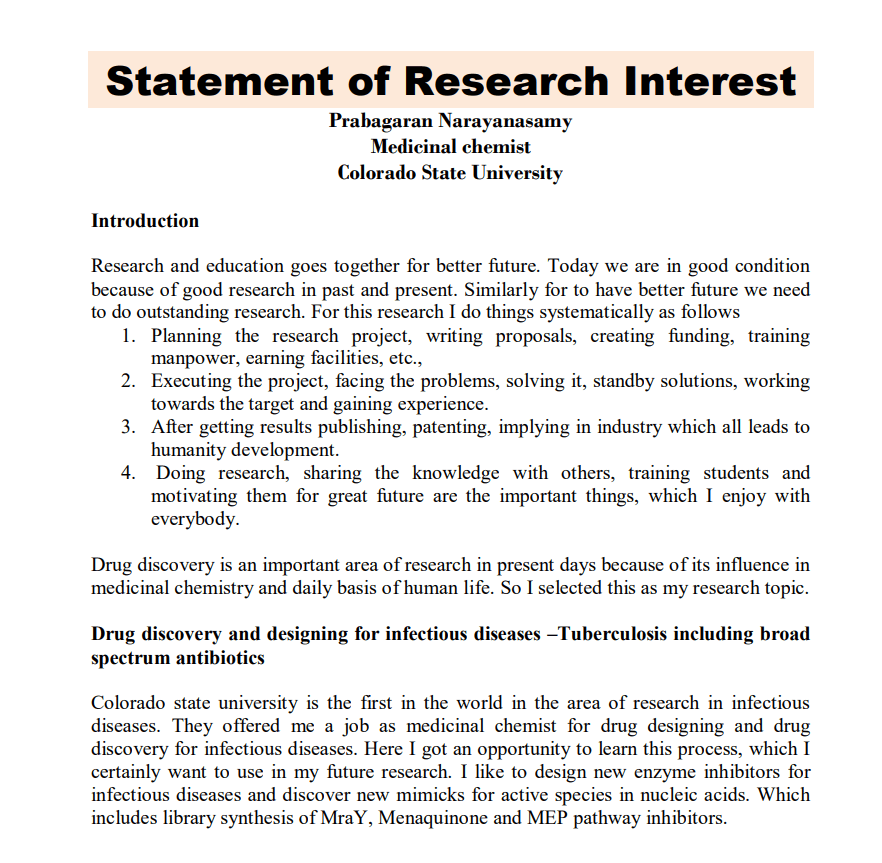
Statement of Research Interest Sample
File Size: 342 KB
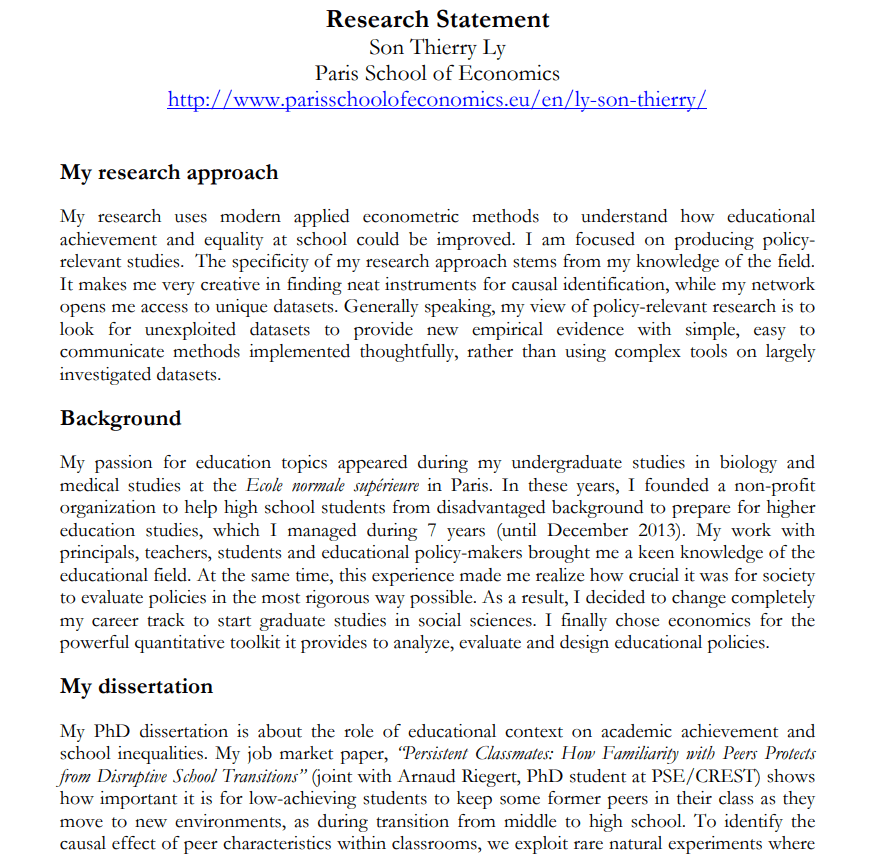
Academic Research Statement Sample PDF
File Size: 78 KB
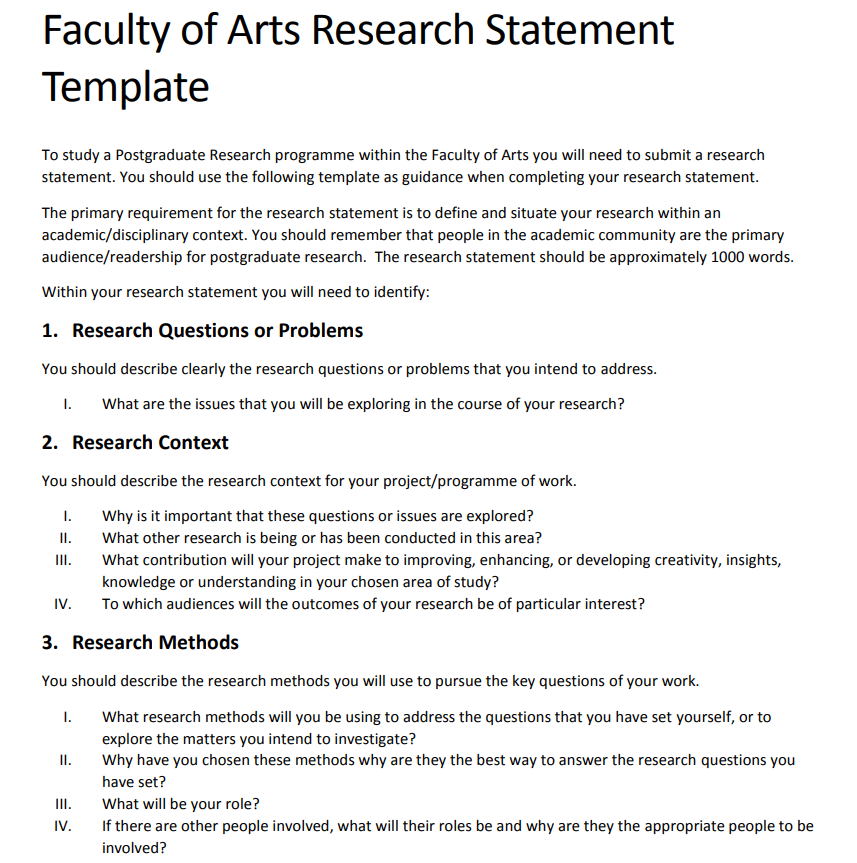
Faculty of Arts Research Statement Template PDF
File Size: 175 KB
Psychology Research Statement Sample
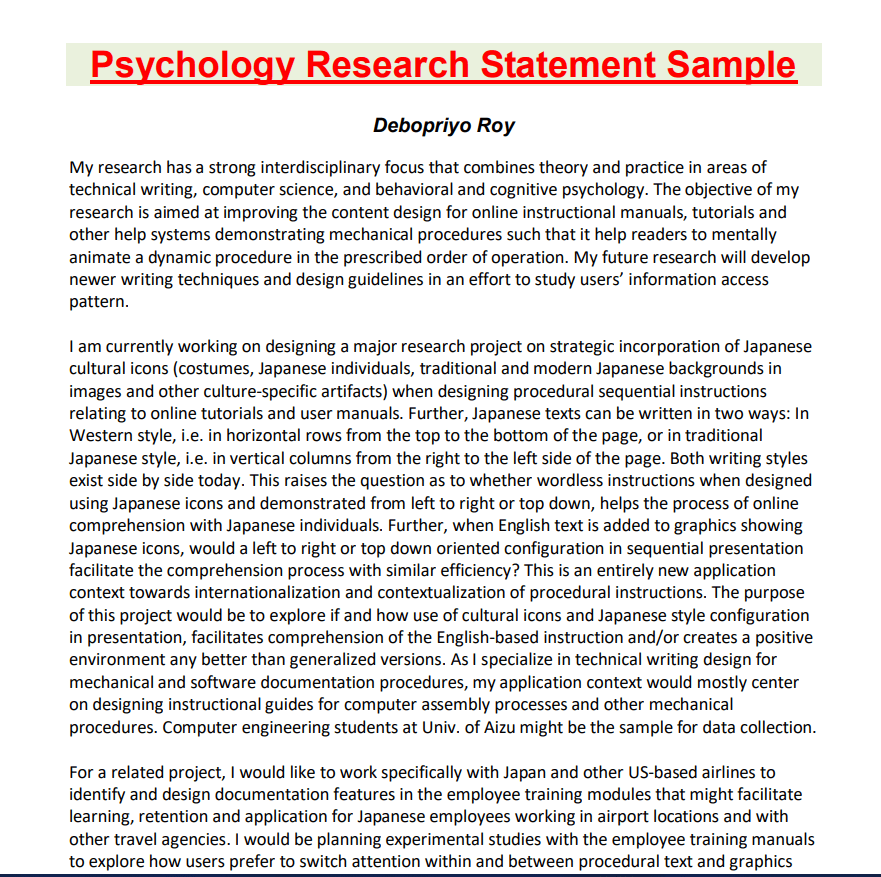
File Size: 406 KB
Fillable Research Statement Form PDF Sample
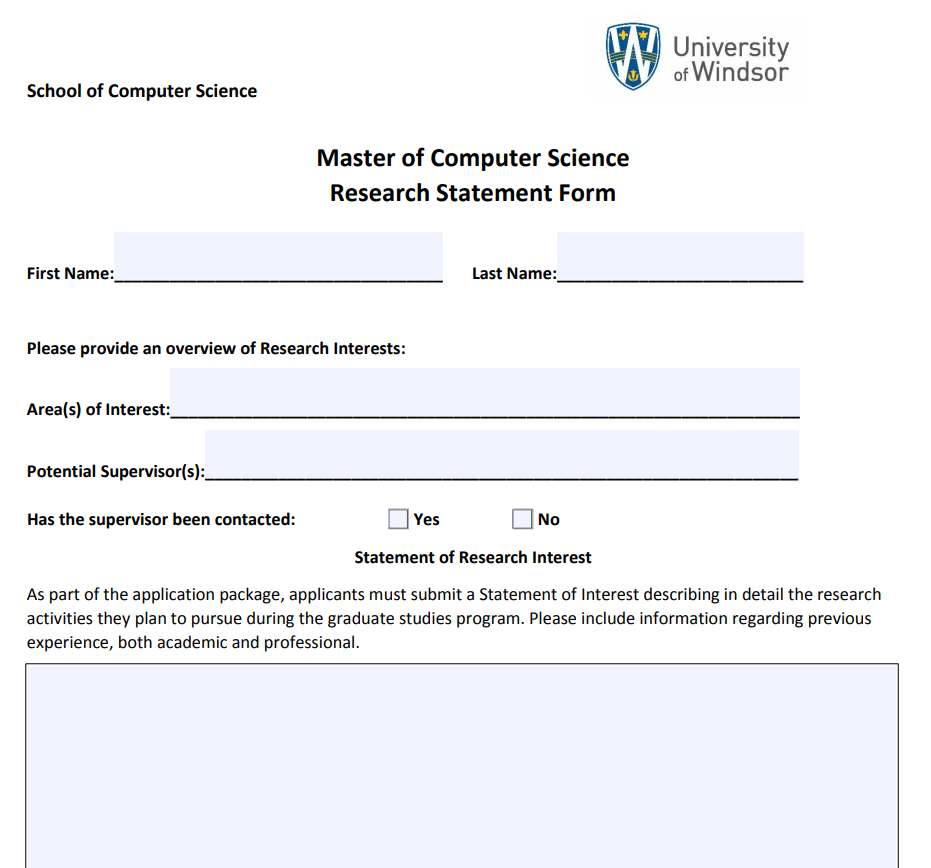
File Size: 475 KB
Sample Business Management Statement of Research Interests
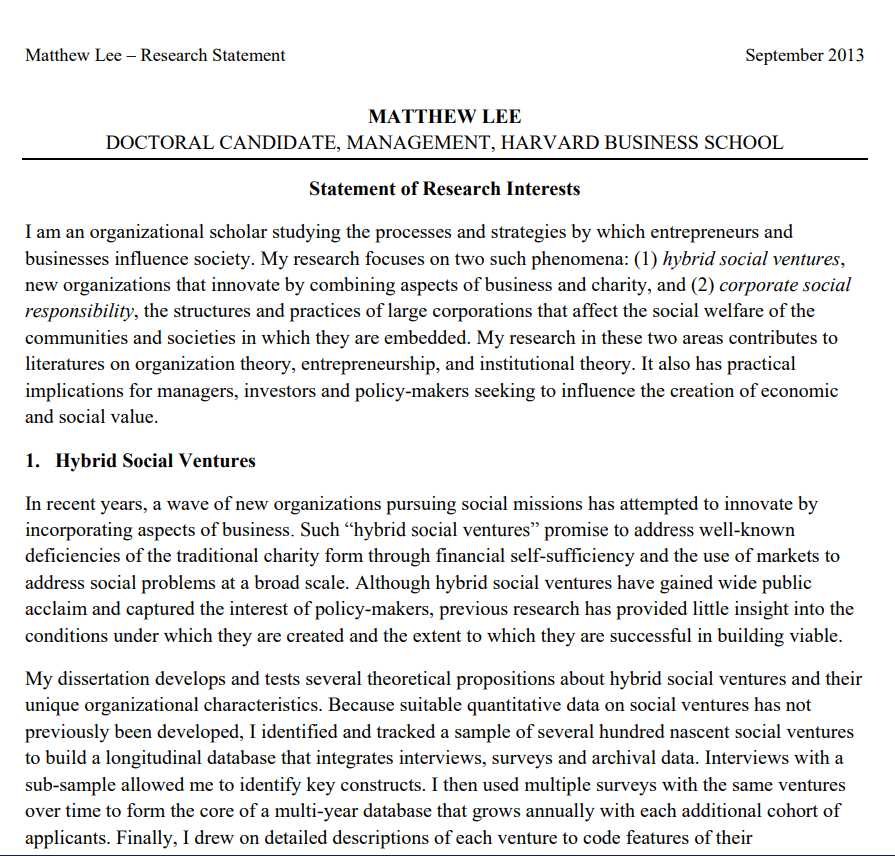
File Size: 226 KB
More Research Statement Examples
Blockchain Research Statement PDF Sample
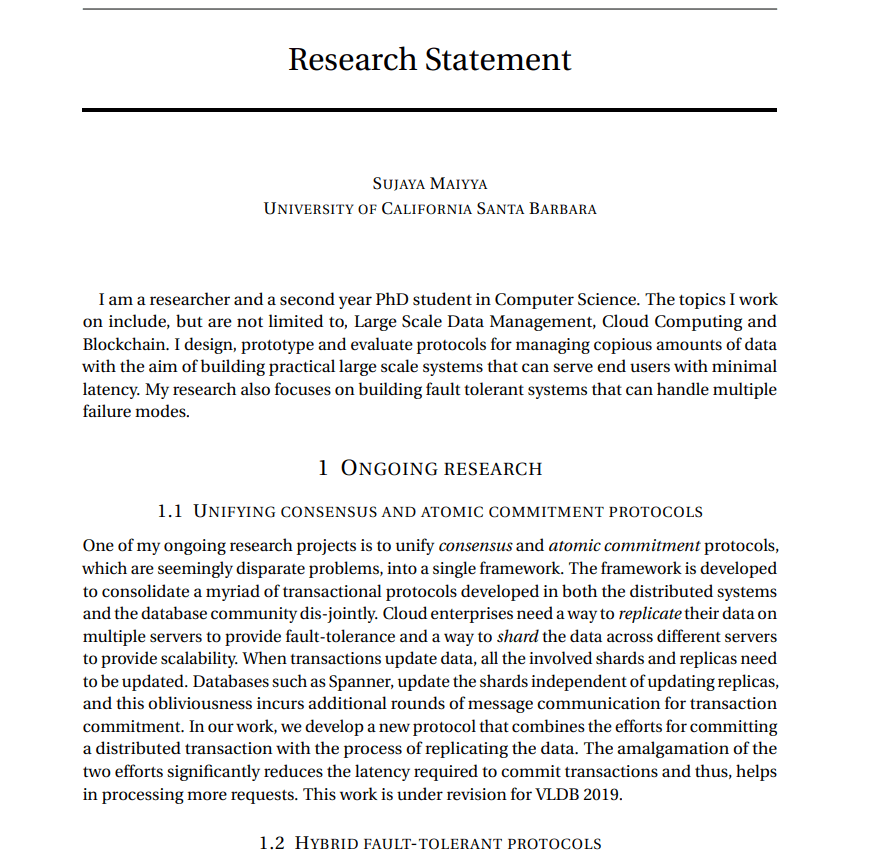
File Size: 37 KB
Standard Research Statement Template
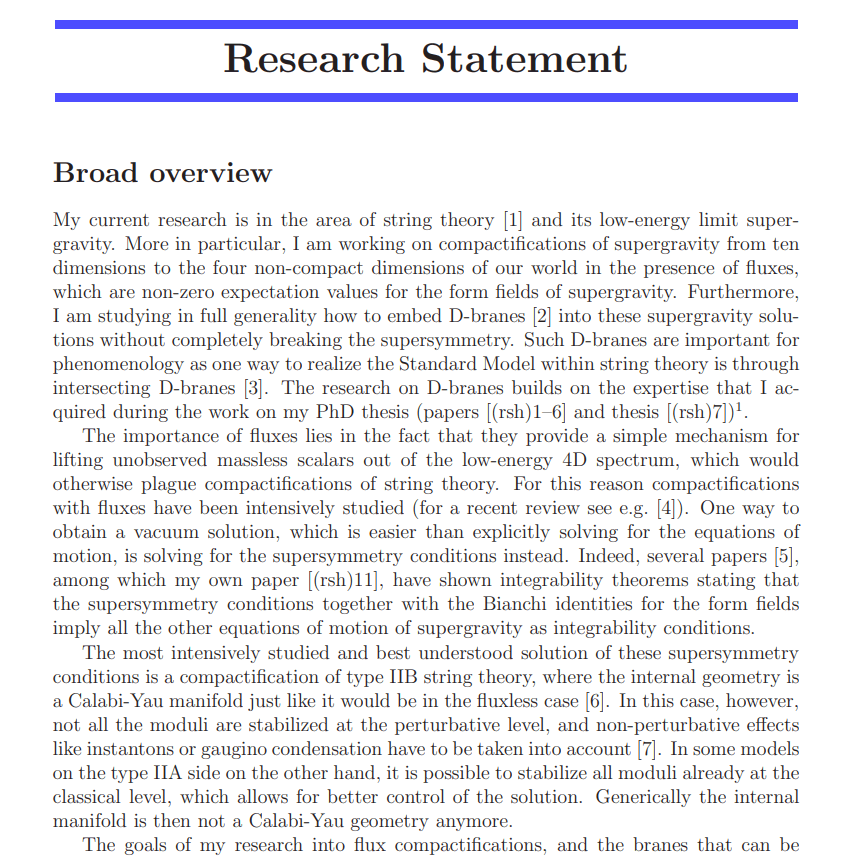
File Size: 66 KB
Professional Research Statement Template PDF
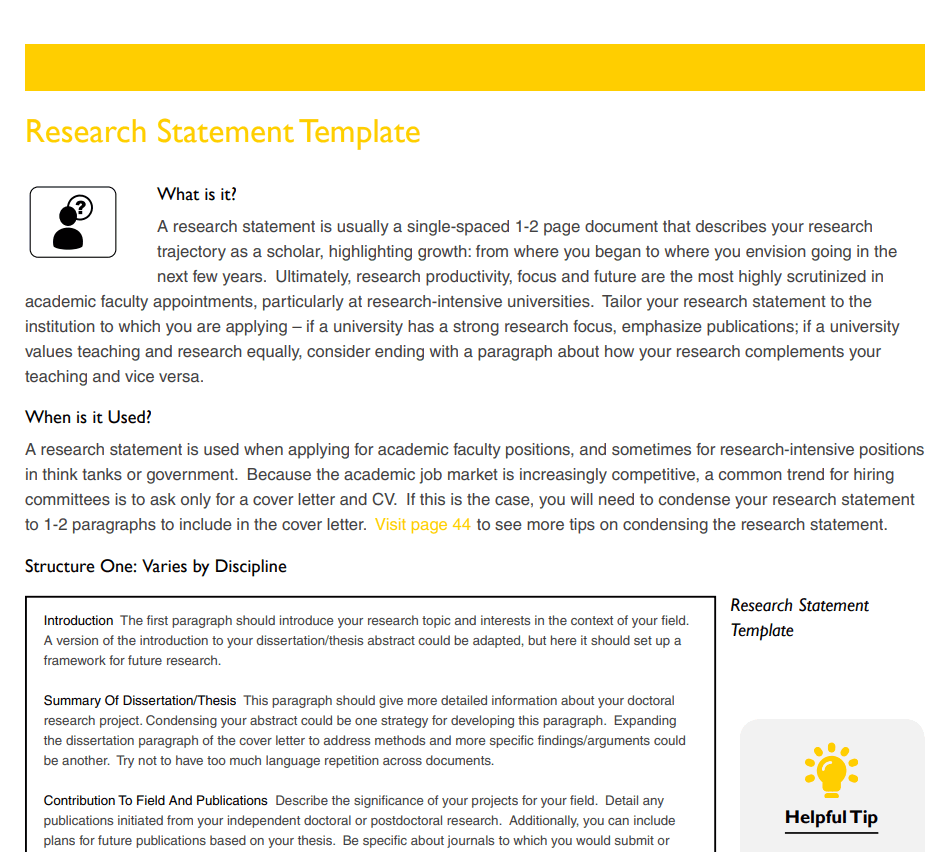
File Size: 64 KB
Building your statement
- Read the call or job advertisement carefully. Note any page limits, required sections and what the institution emphasizes, such as interdisciplinary work, community engagement or external funding.
- Open with your central question. In a few sentences, describe the broad problem your research addresses and why it matters to the field or to society.
- Summarize past and current work. Group your projects into themes and explain key findings and contributions, citing major publications briefly. Focus on what you discovered, not just where you published.
- Present the future agenda. Describe two or three concrete projects for the next several years, with short-term and longer-term goals. Explain methods and why you are well placed to pursue them.
- Address resources and funding. Mention grants you hold or plan to seek, facilities you need, and how you would involve graduate or undergraduate students.
- Connect to the institution. Show how your work complements existing faculty, centers or programs without overstating collaborations that do not yet exist.
- Close with your broader vision, a sentence or two about the long-term impact you hope to achieve.
Writing for a mixed committee
Write for intelligent non-specialists. Hiring committees often include faculty from neighboring subfields who will not know your technical vocabulary. Explain the significance of your work in plain terms before moving into detail.
Show a coherent thread. If your publications cover varied topics, explain the underlying question or method that ties them together. A scattered record presented as a single agenda reads far more convincingly.
Be specific about the future. Statements that say “I plan to continue my research” give committees little to evaluate. Name the next projects, likely outputs and possible funding sources.
Balance confidence and realism. Present your contributions clearly, without exaggeration. Committees respond well to ambition that is backed by evidence of progress.
Match the length to the request. If no length is given, ask colleagues in your field what is typical. Overlong statements suggest difficulty prioritizing.
Seek feedback. Advisors, mentors and colleagues who have served on search committees can spot jargon, gaps and claims that need support. Allow time for several drafts.
Finally, think about how the statement fits the rest of the application. It should be consistent with your CV, cover letter, teaching statement and letters of reference, without repeating them. The CV lists outputs; the research statement explains the story that connects them and where it goes next. When the documents agree, the committee gains a clear, credible picture of you as a researcher.
Frequently Asked Questions
How should early-career researchers handle a short publication record?
Emphasize the quality and direction of your work rather than quantity. Describe your dissertation findings, papers under review and work in progress clearly, and show how they lead to a strong future agenda. Committees hiring early-career candidates expect potential, so a well-reasoned plan carries considerable weight.
Should a research statement mention teaching or mentoring?
Briefly, where they connect to research. Explain how students could participate in your projects or how your research informs courses. Detailed teaching philosophy belongs in a separate teaching statement if one is requested, so avoid duplicating that material in this document.
Is it acceptable to use first person in a research statement?
Yes. Research statements are personal accounts of your agenda, and first person reads naturally. Using “I” also makes your own contribution clear, especially in fields where most work is collaborative. Describe co-authored projects honestly, indicating your role without dismissing collaborators.


